
Objects and equipment
Ear Trumpets
People used ear trumpets to direct sound towards the ear before electronic hearing aids became widespread. The examples in the catalogue span several decades.
Explore the art, publications, records and objects that tell the story of Deaf life in Britain.
11 items
Objects and equipment
People used ear trumpets to direct sound towards the ear before electronic hearing aids became widespread. The examples in the catalogue span several decades.

Art
Thomas Davidson painted this large work, whose title means ‘be opened’. The BDHS catalogue recorded it as a loan from the Townsend Trust.
Books and printed material
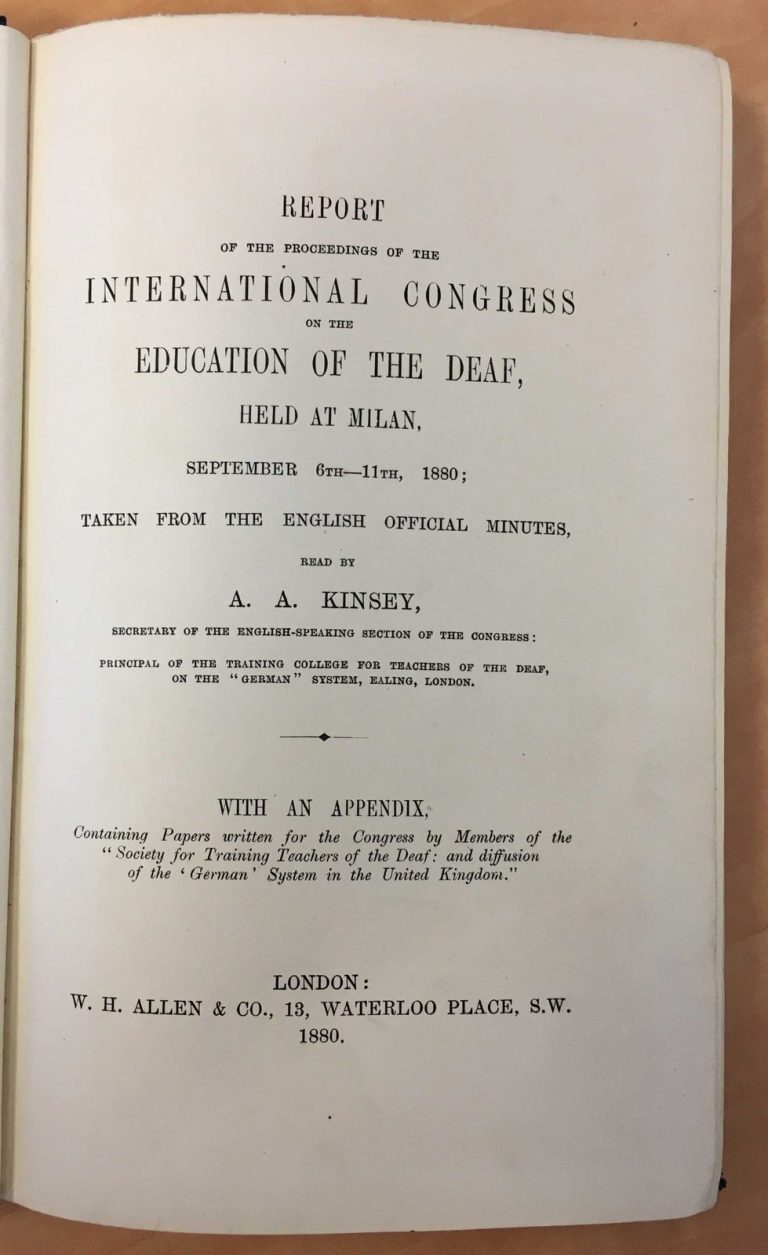
This volume collects speeches and essays associated with the International Congress in Milan, a significant event in the history of education for Deaf children.
Objects and equipment
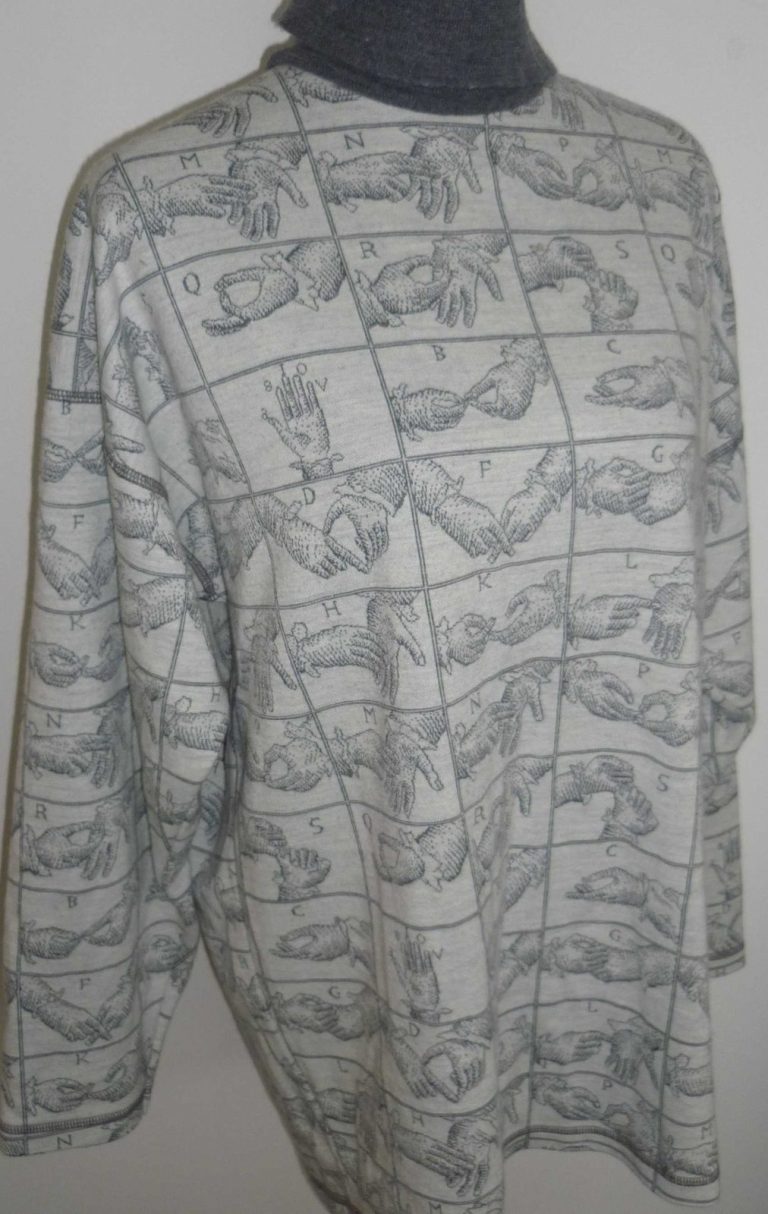
This jumper displays the manual alphabet. It was found in a charity shop in Hastings.
Objects and equipment
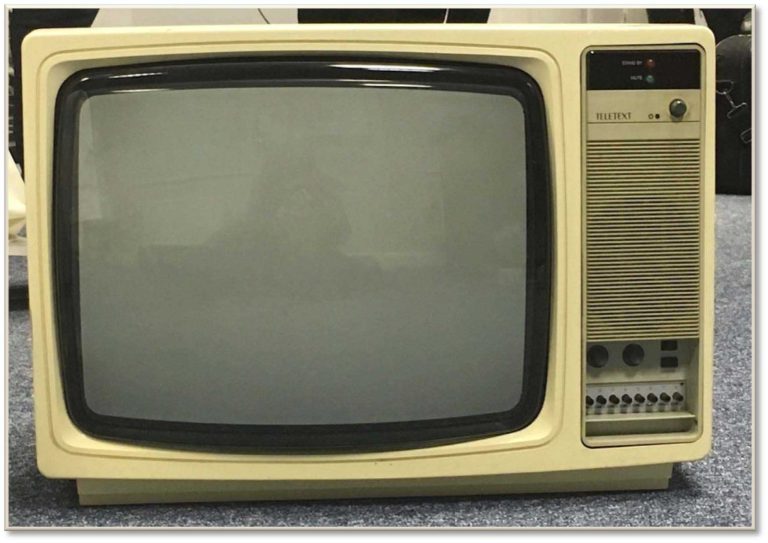
This Granada set belongs to the early history of teletext. Teletext later let viewers use page 888 to display subtitles on compatible televisions.
Objects and equipment
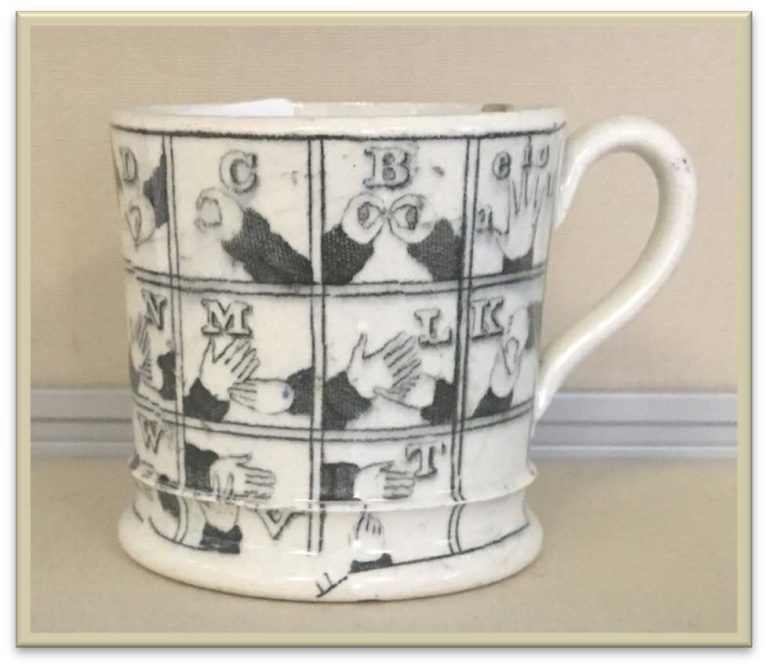
This child-sized pearlware mug carries a fingerspelling alphabet. The BDHS catalogue links it to the school for Deaf children in Exeter.

Art
Paul-François Choppin made this plaster cast depicting the French educator Abbé Charles-Michel de l’Épée. It came to the collection from St Saviour’s Church.
Books and printed material
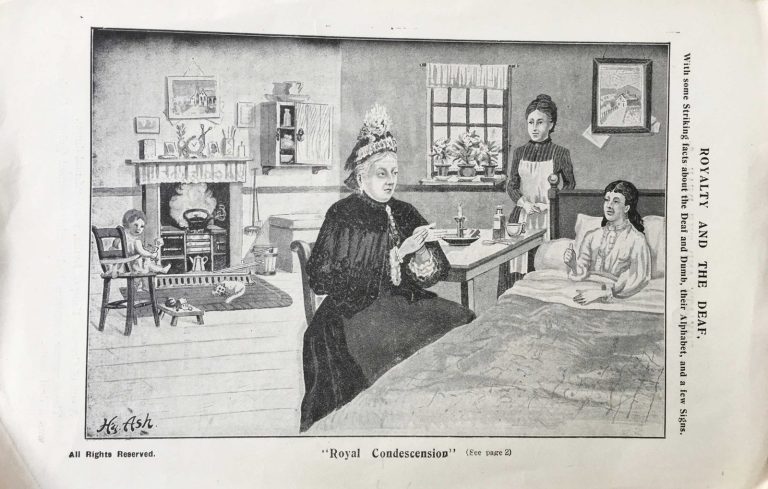
The cover of Henry Ash’s pamphlet depicts Queen Victoria fingerspelling to a Deaf woman. The pamphlet came from the National Deaf Club collection.
Objects and equipment
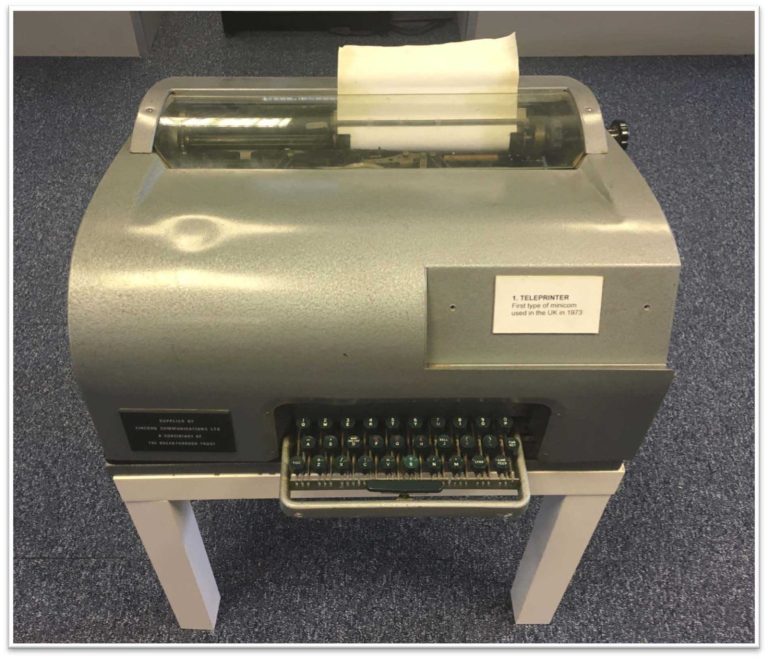
A teleprinter let users send and receive typed messages over a telephone line. This example belonged to Carole and Glen Harris and dates from before textphones became common.
Art
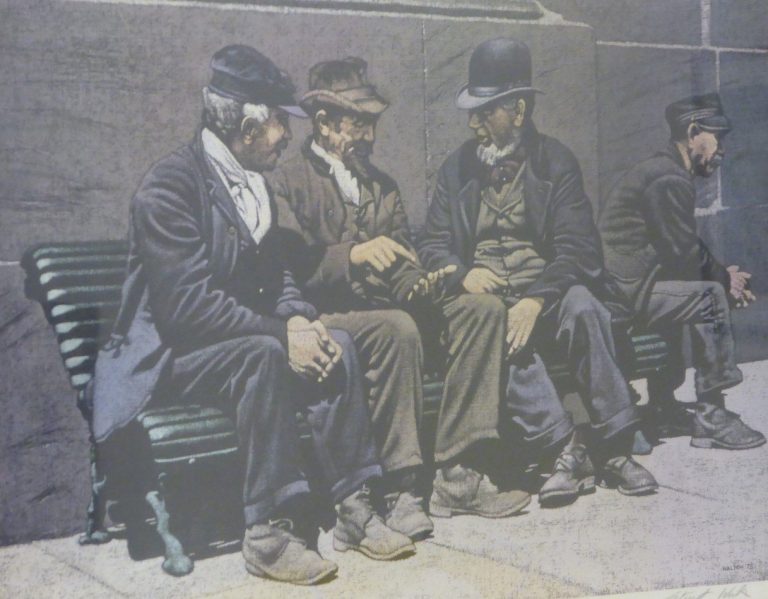
Stuart Walton places Deaf figures in conversation, with a hearing person outside the exchange. The painting makes the experience of being left out of a conversation visible.
Objects and equipment
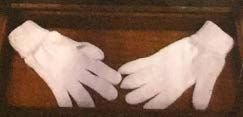
Peter Brown wore these white gloves on a march supporting official recognition of British Sign Language. They are a reminder of the BDA’s recognition campaign.